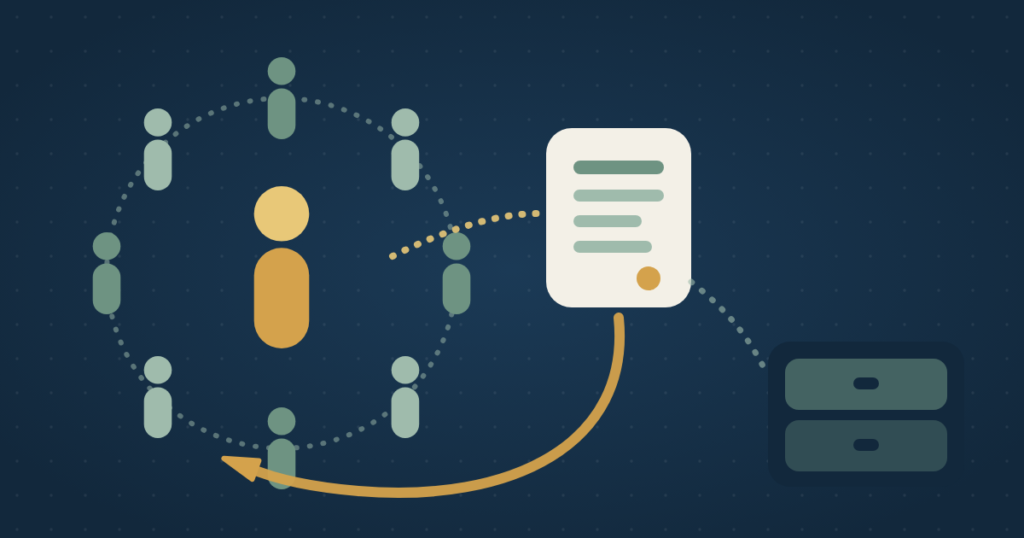
David W. Bracken, Dale S. Rose, and Allan H. Church define 360° feedback in an article as a process for collecting, quantifying, and reporting coworker observations about an individual, whose intended outputs include sustainable change in behaviors the organization values, at the level of the individual, the group, or the organization. The question here, from a team angle: if the ratings come from the team members themselves, why does the team so often stay the same afterwards?
What does the evidence say about behavior change after 360?
In a meta-analysis of 24 longitudinal studies, Smither, London, and Reilly found that improvement over time in direct-report, peer, and supervisor ratings is “generally small,” and that improvement is likelier when the feedback indicates that change is necessary, the recipient has a positive orientation toward feedback and believes change is feasible, and the recipient sets suitable goals and takes action. In a study of 1,361 senior managers (Smither and colleagues), those who worked with an executive coach improved more than the others, but the effect size was small (d = .17). Bracken, Rose, and Church argue, however, that meta-analyses dilute results because process designs vary, that every design and implementation decision can strongly influence outcomes, and that effort should go into improving methodologies rather than asking whether 360 “works.” It follows that a weak average effect does not mean the tool is barren; it means most processes are not designed for what actually changes behavior.
Why do reports end up in drawers?
The authors name a practice they call the “desk drop”: collecting the data, compiling the report, and handing it to the leader with no help in interpretation, development planning, or follow-up accountability. They relate that a process owner at a large corporation admitted that 27% of more than 4,000 participating managers never even downloaded their reports; this is an oral anecdote, not a published study. They say the most common reason a process fails, in their experience, is lack of follow-through, in other words lack of accountability. They also relay from London, Smither, and Adsit that accountability has three parts (the ratee’s use of results, the raters’ accuracy, and the organization’s provision of support for change) and from Goldsmith and Morgan that follow-up with raters is strongly related to behavior change that raters perceive.
What does this mean for a team rating its leader?
Here the raters are the team members, who are the first to see change or its absence, so going back to them is not an administrative step but what makes the team a partner in the change. Bracken and Rose are credited with four design conditions for behavior change: relevant content, credible data, accountability, and census participation. The more recent article by Bracken, Rose, and Church refers to that paper for the point that change spreads when an individual’s change affects others or when many people take part in the initiative. With teams this can be turned into three practices: the leader does not choose the rater list alone; care is taken that a small number of raters does not expose anyone’s identity (the common rule is to suppress results below three raters); and before launch a meeting with the team is scheduled, some months later, to show what changed.
Does the instrument even detect change?
The authors explain that 360 data are “very sensitive” to the response scale, that rating labels can noticeably shift the distribution, variability, and mean, and that choosing an agree/disagree scale is often a default inherited from employee surveys rather than a considered decision. If it is not decided before launch how modest improvement will be detected after six months, the leader may truly change while the numbers sit still, and it is wrongly concluded there was no effect. That is why the choice of instrument and response scale is part of the program’s design, not an add-on after it ends.
A practical takeaway: Before you launch a 360 process in your team, write down answers to three questions: who sees the results, and when is the follow-up meeting? How will the raters hear what came of their input? And how will we detect a modest change after six months? If any answer stays vague, the report will most likely become a paper in a drawer.
Sources
-
Bracken, D. W., Rose, D. S. & Church, A. H. (2016), “The Evolution and Devolution of 360° Feedback,” Industrial and Organizational Psychology 9(4), 761–794
-
Smither, J. W., London, M. & Reilly, R. R. (2005), “Does Performance Improve Following Multisource Feedback? A Theoretical Model, Meta-Analysis, and Review of Empirical Findings,” Personnel Psychology 58(1), 33–66
-
Smither, J. W., London, M., Flautt, R., Vargas, Y. & Kucine, I. (2003), “Can Working with an Executive Coach Improve Multisource Feedback Ratings over Time?,” Personnel Psychology 56(1), 23–44
-
Bracken, D. W. & Rose, D. S. (2011), “When Does 360-Degree Feedback Create Behavior Change? And How Would We Know It When It Does?,” Journal of Business and Psychology 26(2), 183–192
Next step
If your team collects 360 ratings and then never goes back to the people who gave them, a short team diagnostic conversation is enough to read where the thread breaks, with no commercial pressure. Book a session.