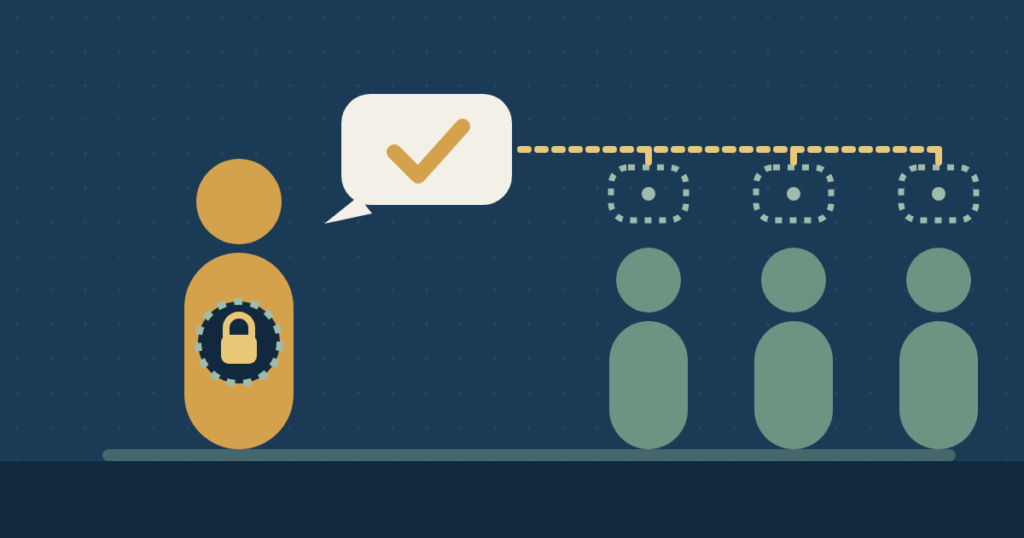
In one-to-one check-ins, a leader asks each team member, “How are you, really?”, listens, and adjusts the schedule if needed. Then the leader is asked the same question and answers with a single word: “Fine.” That small asymmetry is the doorway into the thirty-seventh limiting belief: “pain is endured in silence, never understood”, meaning that physical discomfort is put up with but never named, never asked about and never allowed into the language of work.
The usual distinction in this series applies: the event is not the belief. Real events took place : a professional environment that praised “the one who never complains,” or a moment when someone mentioned discomfort and met a remark that made them regret it, or a decisive stretch in which they finished the job in silence and it succeeded, so they learned that silence is what worked. The belief is the silent verdict that settled afterwards: “silence is competence, and talking about discomfort is softness.” It is worth setting the limits of this article here: it addresses no particular pain and not what any pain means or calls for, which is a matter for a physician alone. Its subject is the leader’s stance toward speaking about their own condition, and what that stance does to their decisions and their team.
How does this show up in decisions and in the team?
In organisations, three patterns recur.
The closed answer. “Fine” is delivered in the same tone every day, so the team cannot tell when the moment is right to raise something difficult and when it is not. Curtness in the afternoon is read as a verdict on the work, a distracted look in a meeting as indifference, and people supply their own explanations for what one sentence would have covered. The team pays for interpretations it never asked to make.
The taught silence. A team learns from its leader what the leader never says: in this team, discomfort is not mentioned. Someone who needs a break from a long meeting does not ask for one, and someone hindered by some aspect of their working conditions waits for the day to end. The capacity to endure becomes an unwritten criterion of belonging, without anyone having decided that.
The postponed date. Whenever an adjustment to the schedule or to how the load is shared comes into view, the leader says: “after the close,” “after the launch,” “this isn’t the time.” The question is deferred not because its answer is hard but because raising it would mean admitting there is something worth asking. So the whole week’s decisions are made in a condition nobody has been told about.
Where is the line between privacy and blanket silence?
Not every act of keeping quiet is evidence of this belief. A leader, like anyone, has a genuine right not to share details of their body with the team, and privacy is a mature practice with nothing lacking in it. The distinguishing mark is generalisation: silence becomes a fixed rule that covers even the organisational sentence carrying no personal detail, such as “this meeting is longer than suits the quality of my decisions, so let’s take five minutes.” Privacy chooses what to say; the silent verdict forbids saying anything at all, because it sees weakness in speech whatever its content.
An essential note: this article is not medical advice and not a diagnosis. It does not explain any pain, does not suggest how to handle any symptom, and does not link any belief to any health condition. It is a practical framework for reading a leader’s stance on speaking about their own condition and its effect on their decisions, not a clinical classification. Anyone who has persistent or worrying pain should take it to a physician or a licensed specialist as the appropriate first step, which a general behavioural framework like this one cannot replace. And anyone who feels their silence about their own state is affecting the people around them to a troubling degree will find specialist support an appropriate step too.
What changes when speech is allowed into the language of work?
The practical difference worth reflecting on: the aim is not for the leader to become a speaker about their body, nor to open a personal file for the team, nor to explain to anyone what they feel. The aim is to break the rule in one small place: to move whatever concerns working conditions out of silence and into ordinary work language: a schedule, a duration, a time, an order of tasks. When a leader says “let’s shorten the meeting” or “I need to look at this tomorrow,” the team learns that a person’s limits are an input to planning, not a secret to hide, and “How are you?” changes from a ritual courtesy into a doorway to arranging the work. The leader who endures in silence pays the price in their decisions and in what their team learns from them; the leader who names their organisational condition without personal detail spares everyone the guessing about what was never said.
Practical takeaway: this week, pick one practical situation (a meeting, an appointment, the order of a task) and adjust it with one explicit organisational sentence, without describing or interpreting any physical sensation.
Next step
If you find that “Fine” has become your fixed answer rather than your choice, a short introductory conversation — you can book one at saadhamidi.sa — is a suitable first space to reflect on what this silence does to your decisions and your team, and nothing more than that at this stage.