This conviction usually starts from small events rather than a stated idea: a delivery that slipped without warning, a figure presented in a meeting that turned out to be inaccurate, a sensitive detail that left the meeting room, a delegated task that came back incomplete. These events really happened, and they deserve to be taken seriously. The limiting belief, though, is the silent verdict built on top of them: “the team cannot be trusted.” The difference between the two is fine but important: the event concerns one situation, one person and one moment, while the verdict concerns “the team” as a whole and everything that comes after.
That verdict is rarely spoken aloud. The leader who holds it does not announce distrust; they simply act on it. They re-check, they keep the decision, and they postpone delegation until “they prove themselves”, a date that never arrives, because the opportunity in which trust could be proven is never given. Nor do they usually ask whether the delay came from carelessness, from an unclear request, or from an overloaded owner. The verdict makes the question unnecessary.
How does this show up at work?
Three patterns recur:
Blanket verification. Every output passes through the leader before it is approved, not because the risk is high but because reassurance only comes from their own eyes. Quality becomes, for the team, “what the leader signs off” rather than “what I committed to”, and the leader turns into a bottleneck where work piles up.
Reclaimed delegation. The leader hands over a task, then returns two days later “to help”, rewriting the report or stepping into the client conversation directly. The team takes away one lesson: delegation is an announcement, not a transfer of ownership. So they stop taking initiative, and the leader reads that withdrawal as fresh evidence for the first verdict, and the circle closes on itself.
The narrow circle. Caution is not spread evenly. The leader picks one or two “safe” people and routes everything through them, while everyone else is left without the full picture. Two layers form in the team: those who know and those who guess, and the favoured few learn that their value lies in proximity, not competence.
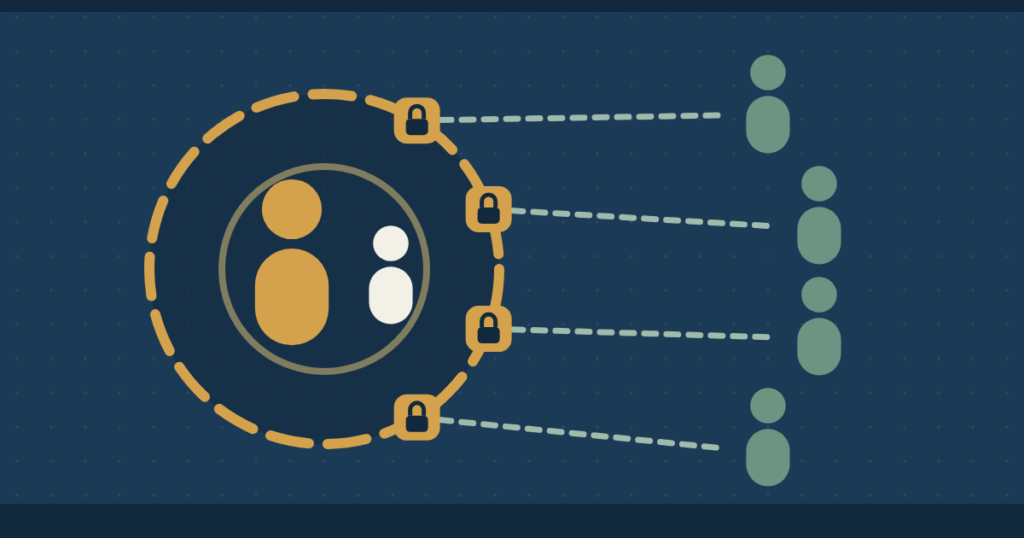
What the team hears from all this is not what the leader means. The leader means: “I am protecting quality.” The team hears: “you are not to be relied on.” Over time people learn to live up to the expectation: they escalate small decisions to you and hide small mistakes so they are not reviewed, so problems reach the leader late, and the lateness becomes one more proof of what they already believed.
Where is the line between professional caution and a permanent verdict?
Not every check is evidence of this belief. Reviewing a document that carries a major commitment is a sound professional decision, and trust built on an actual track record is calibrated, not naive. The distinguishing mark is generalisation: verification becomes the default for everything and everyone, whatever the size of the risk and whatever the person’s own record. Calibrated caution changes when the evidence changes; the silent verdict does not change however much evidence accumulates, because it does not read the evidence at all, only what confirms it. The more useful question is not “should I review?” but “what truly deserves my review, and what deserves to be left with its owner?”
An essential note: this description is a practical framework for reading leadership behaviour, not a clinical classification, and not a substitute for specialist follow-up where needed. Anyone who feels that lack of trust has become exhausting, or is affecting their relationships and the people around them to a troubling degree, should take specialist support as the appropriate first step, psychological or professional depending on the nature of the impact, rather than settle for a general framework like this one. And if a real breach of integrity lies behind the verdict, it deserves a clear procedure under the organisation’s rules, not a silent interpretation.
The practical difference worth reflecting on: the aim is not for the leader to trust everyone absolutely, but to replace the general verdict with a specific question in each case: what do I trust this person with, to what extent, and on what record? Trust here is not a feeling the leader waits for but a decision tested in small, reviewable steps, widening when reality supports it and narrowing when reality contradicts it, instead of shutting the door once on everyone. Practical takeaway: this week, pick one low-risk task, delegate it clearly with no interim review, then review the result alone, and notice what changed in your verdict afterwards and what stayed.
Next step
If you recognise yourself in one of these patterns more than once, a short team-diagnostic conversation, adapted to your team and your context, is a suitable first space to see where trust can widen and where it should narrow, and nothing more than that at this stage.