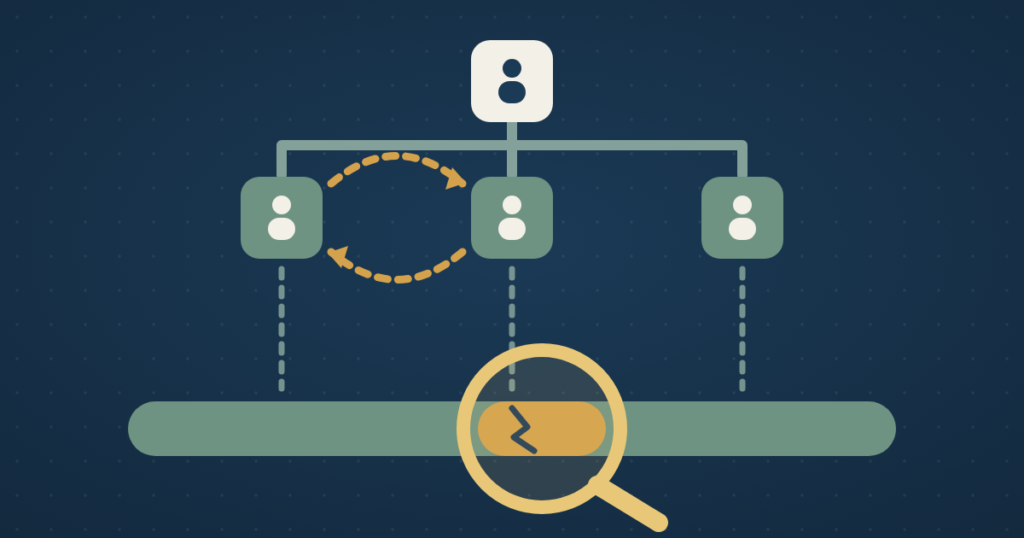
In an article by Scott Keller, the author draws on a McKinsey survey run in September 2013 that drew responses from 2,063 executives. Only 23% of those who had been through an organizational redesign said it met its objectives and improved performance; 44% said it bogged down in implementation and was never finished; another 23% said it was fully implemented but missed its objectives; and 10% said it significantly impaired the performance of the companies it was meant to revive. He adds that following nine rules makes a redesign upward of seven times more likely to succeed than following only a few. These are executives’ assessments of their own experience, not independent measurements. Hence the question for any leadership team considering a reorganization: is the problem in the structure at all?
Why is redrawing the boxes not enough?
In January 2026 Bain & Company published a survey of nearly 1,000 executives and employees who had been through a reorganization: 88% of leaders were confident their new structure would achieve its goals, against only 36% of the employees working in it, and only 22% of employees said they had received enough training, coaching or tools to adapt. The firm quotes its partner Tracy Thurkow as saying that structure alone does not deliver the intended results (paraphrased). And Michael Mankins wrote that more than half of CEOs reorganize their company within their first two years, and that most of these reorganizations accomplish little and some make matters worse.
Which questions should be asked before drawing any new structure?
A restructuring toolkit is attributed to CEB (Corporate Executive Board), warning that restructuring can mask other root causes of weak performance and calling for a look at strategy, roles, capabilities, systems and processes before structure itself. Three questions are enough to put to the leadership before any box is drawn:
- What problem are we trying to solve, and how do we measure it today?
- If we replaced today’s people with the most capable in every role, would the problem disappear? If it would, the fault lies in capability, not structure.
- Do our systems, rewards and processes contradict the behavior we want from the new structure?
If the answers point away from structure, the advisor who says so before a long project forgoes the project fee and earns trust that lasts beyond it.
If structure is the cause, where to start?
When the answers do point to structure, the starting point is how work flows to the customer, not from the question “who reports to whom?” The second question often slides into personalities and internal politics, while the first can be argued on the logic of service and accountability. First, the leadership is shown how value is produced for the customer across departments; then comes the question of where delivery stalls, work is duplicated or accountability is missing; and only then are reporting lines proposed. This is a working method from consulting practice, not attributed to a reference.
How can employees’ commitment be protected during the change?
In Wanberg and Banas’s study of employees in a reorganizing workplace, three context-specific variables predicted employees’ openness to the changes: the information they received about them, their self-efficacy for coping, and their participation in the change decision process. Lower change acceptance was associated with lower job satisfaction, more work irritation and stronger intentions to quit. Two practices follow from this: say what is clear and what is not yet decided rather than keep silent, and involve people in the details of the design, not only in the announcement. Consulting practice adds two more: name explicitly what the change will end, and track human indicators such as absence and turnover throughout the process, not after it ends.
A practical takeaway: If you are considering a reorganization, put this question to your leadership team before any drawing: if we replaced everyone in this structure with the most capable people in each role, would the problem disappear? If yes, start with capability; if no, the structure is a candidate for diagnosis.
Sources
- Keller, S. (2018), “Reorganizing to capture maximum value quickly,” McKinsey & Company, February 20, 2018 (McKinsey survey, September 2013, 2,063 executives).
- Bain & Company (2026), “88% of leaders are confident their reorganization will deliver – only 36% of employees agree,” press release, January 29, 2026.
- Mankins, M. (2010), “The Right Time to Re-Org,” Harvard Business Review, June 3, 2010.
- Wanberg, C. R. & Banas, J. T. (2000), “Predictors and outcomes of openness to changes in a reorganizing workplace,” Journal of Applied Psychology 85(1), 132–142.
- CEB, “Organizational Restructuring Toolkit.”
Next step
If your organization is weighing a reorganization, a short scoping call — you can book one here — is enough to decide whether the diagnosis should begin with structure or with something else, with no commitment and no sales pressure.